Readers,
Isn’t it uplifting to read a post where a knotty question is presented in the beginning, followed by a few colorful missteps in the middle, leading to a predictable, satisfying conclusion?
Whatever prompted me recently to yearning for Getting Things Sewn, the Agatha Christie cozy mystery edition? Hint: I’ve been confronting my fabric stash–again.
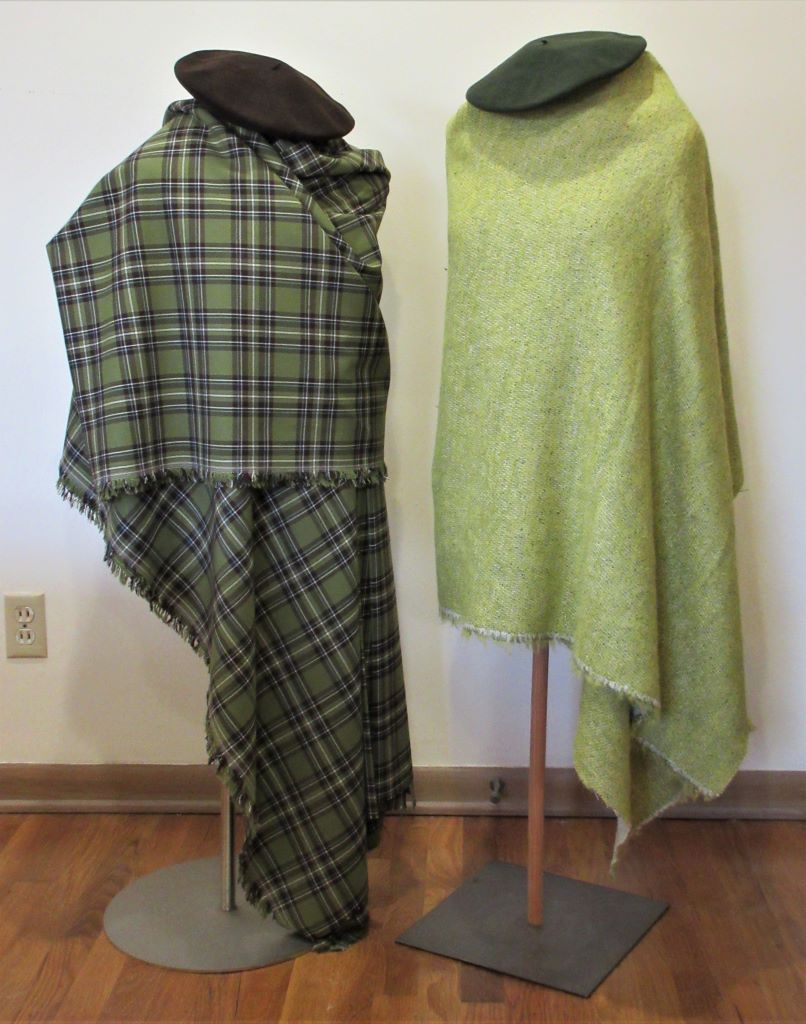
It’s a familiar scene: me, pulling fabrics off shelves, unfurling them on tables, and fanning out the color swatches of the palettes from my color consultations. Squinting close up or standing back and judging fabrics for the right degree of warmth, depth, and mutedness to complement my coloring and level of contrast. Imagining various combinations of fabrics with patterns, fabrics with clothes, fabrics with accessories, fabrics with other fabrics. The possibilities are dazzling and almost endless!
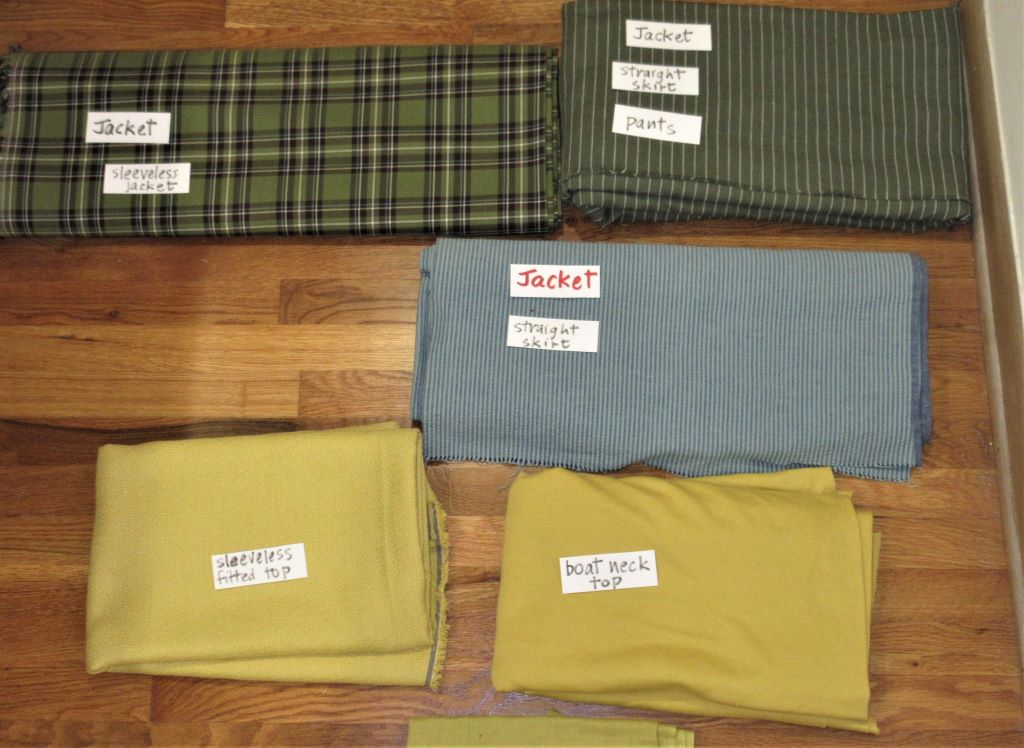
The flip side of this coin, however, is that the probabilities are shrinking that I’ll realize even a tenth of the possibilities, which is a very unpleasant prospect. That is what sent me back to this vexatious task of editing my fabrics even though I never have been satisfied with the result. What result? I stop not because I am done but because I’m mentally exhausted.
I don’t lack for imagination–remember, the possibilities are dazzling. But they are also bedeviling. If ever I’m going to have a fabric collection that serves me, I have to use my imagination in a different way. Because I think this old imagination of mine has driven me right into a ditch called sunk-cost thinking.
Are you familiar with this concept? Read on.
The Doom Loop of Sunk-Cost Thinking, Sewers’ Version
- At the fabric store:
- “I don’t know what I’ll do with this fabric, but I couldn’t pass it up!”
- In the sewing room:
- “This fabric’s not perfect, but how could I get rid of it? It was such a bargain!”
- “So the garment isn’t perfect, but I used that fabric!”
- Looking into closet:
- “That’s a perfectly good garment. I just need to make some coordinates.”
- Back in the sewing room:
- Rifling through fabric stash: “I think these will do.”
- “So the garments aren’t perfect, but I did sew down my stash! And now I have coordinates for that first garment!”
- Looking into closet again:
- “I hate my clothes!”
- “I have nothing to wear!”
- “I can’t get rid of those clothes–I made them.! And the fabrics were such bargains!”
- At the fabric store:
- “I don’t know what I’ll do with this fabric, but I couldn’t pass it up!”
At one time or another I’ve said each of these things to myself. A relatively small initial investment snowballs into more and more good money–or time, attention, or energy–thrown after bad.
Ouch.
My sewing teacher Edith told me, “Avoid compounding errors.” She didn’t say you can avoid errors entirely, but if you recognize them early enough you could correct the error or minimize the damage. At the time she was talking about accuracy in patternmaking, but I haven’t found a situation yet where this approach doesn’t work.
There is another kind of compounded error I plead guilty to: buying fabrics that are right in several important ways but not right in one particular way that does matter, and holding onto fabrics that may have been right at the time for my coloring, taste, or lifestyle but probably are not right anymore. These fabrics are like job applicants who are called in for the interview but never offered the position: good without ever being good enough.
Here’s another category of fabric that is occupying space on my shelves and in my mind: ones I’ve bought before having the skills to turn them into garments. I’m thinking specifically of knits; silky, drapey fabrics; and a raincoat fabric that’s sort of stiff and will not ease much into an armhole. They won’t budge until I budget the time and attention to learn how to work with their characteristics.
So how do I get myself out of the ditch of sunk-cost thinking? Since I can’t just call a AAA tow-truck I’ll have to harness this mischievous imagination of mine for the traction I need.
First, I must stop focusing so much on the individual fabric and more on the individual–me, or whoever else I’m sewing for. What are this person’s coloring, tastes, preferences, now and in the near future? The fabrics must serve the wearers, not the other way around.
Second, I must focus less on individual fabrics and more on relationships of these fabrics within outfits that suit their wearers.
I’m hopeful that this reset of priorities will transform my fabric-editing process from a static mystery with one solution to a dynamic puzzle suggesting many solutions. What more could a fevered imagination ask for?
Related Posts

Paula, I’ve resorted to making reusable grocery bags and lately muslins for the “what was I thinking” fabric. It’s a good way to use up fabric and try out a different pattern in several permutations without feeling too guilty that I am wasting fabric. But yes, all of us have gone through or are going through just what you are going through in regards to our stash.
This is such an important concept. I’ve found that I’ve only begun to understand it after nearly 18 years into my sewing practice, and have bought or inherited many sunk-cost fabrics.
It was Daniel Kahneman’s book Thinking, Fast and Slow, that alerted me to sunk-cost thinking. It’s a good concept to be aware of!
I’ve just stumbled across your blog and relate to much of what you are writing about. My sister sent me one of your links a number of years ago and I am just now reading this. I have trouble finding the right fabric and pattern combination and has resulted in a substantial fabric stash and numerous patterns from years ago, some even decades ago. I like the idea of using up some for muslins, as one reader suggested. It is hard to get rid of some bad fabric purchases I’ve made. It just may be time. I enjoy your perspectives.