Readers,
Yesterday my sewing machine had a conniption fit, and I didn’t know why.
I was starting to sew a wearable test of a knit top. Actually, the third version of this wearable test, which was already testing my patience. The stitching in the shoulder seams looked so weak I thought I’d better stop sewing this top immediately to investigate.
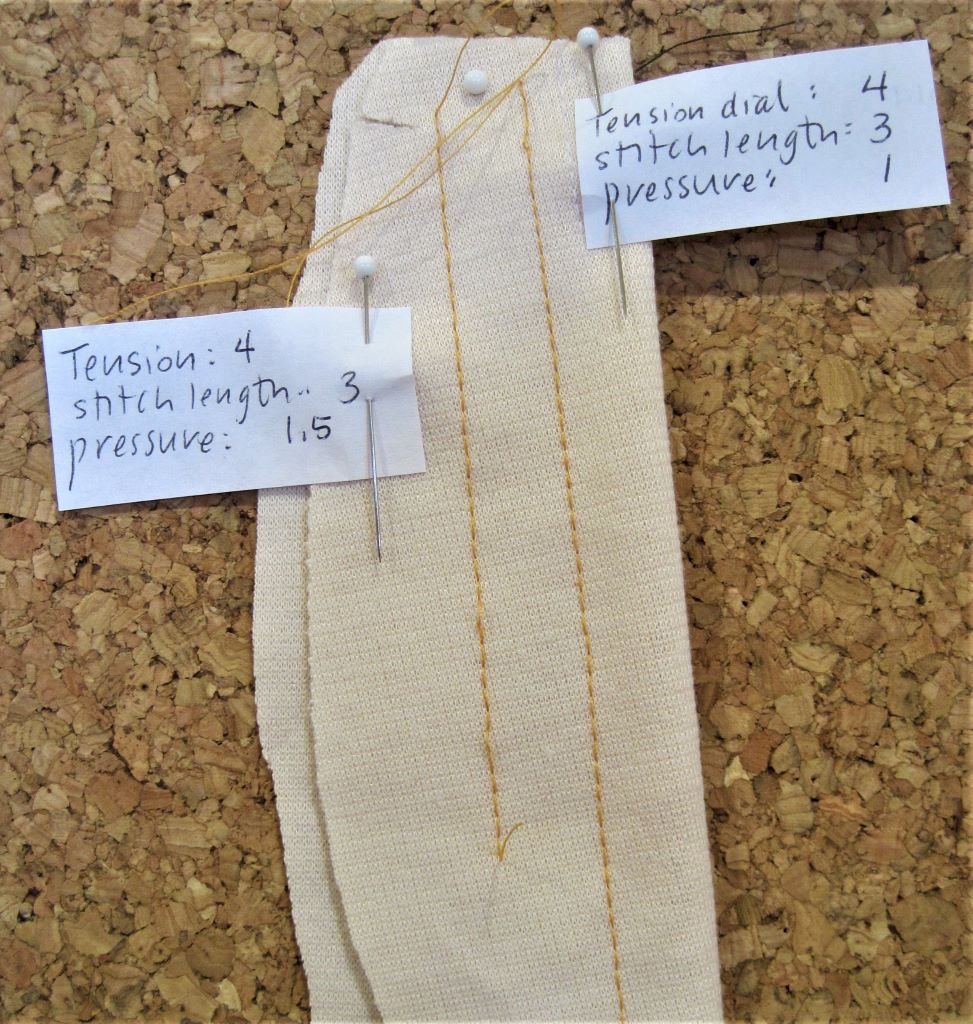
The samples I ran looked like this on the needle side…
…but like this on the bobbin side:
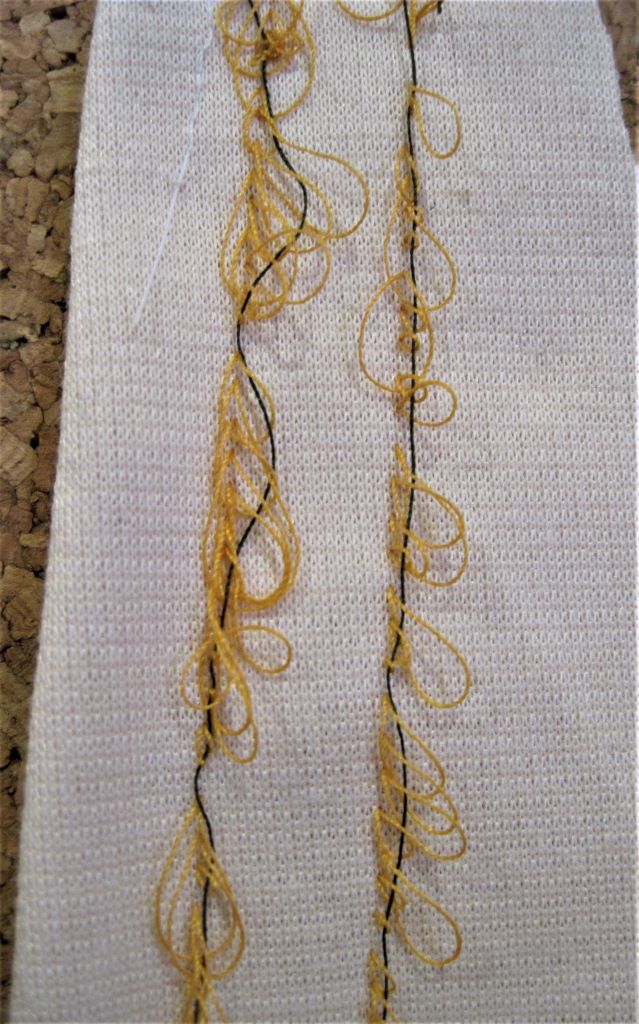
I was in a heap of trouble.
I’ve had the same sewing machine since 1986 and it’s held up well all these years, with not much time in repair shops at all. I haven’t mistreated it but also can’t claim to know much about how sewing machines run, either.
Yesterday I found myself in a new quandary, created by the stay-at-home order in Ohio: If I couldn’t solve this thread tension problem myself, could I find a local repair person willing to work on the machine?
Or, if it was time to shop for a new machine, what should I do? I’d want to test-drive machines. Maybe I could borrow or rent a machine to tide me over. Would anyone be willing to lend me a sewing machine? What’s the etiquette for borrowing a sewing machine during a pandemic?
Another question has arisen during this lockdown time: Should I be making face masks? We recently purchased face masks from an instructor at Sewing Hive, Columbus’s new place to learn sewing and pattern-fitting. But the way things are going, I should probably look closely at my stash for face mask fabrics. I may be setting up a face mask-making project pretty soon–it could even become part of the rotation in my project daily challenge.
I have been wondering, also, about whether we will see a surge in novice sewers and returned former sewers coming out of this health crisis. Stay-at-home orders, face mask-making, and the sudden mainstreaming and glamorization of a skill that had been marginalized by many just might combine to tip the scales.
I hope that more than a few people whose first experience at a sewing machine was making face masks will think, “That was interesting! What else shall I make?” and stick around long enough to find out.
My final questions are for those of us who already know that sewing is as useful and life-enhancing a skill as cooking: Will new and returning sewers find the encouragement and practical, ongoing support that’s essential to reap the greatest rewards? If social distancing becomes a new fact of life, in what ways can we form a community?
As for my sewing machine problem, an article, “How to Achieve Ideal Sewing Machine Thread Tension” on the Threads magazine website led me to inspect the tension discs. Dust and debris turned out to be the culprit.
A gingerly applied brushing, and balance was restored–in more than one sense of the word.
Related Posts



I floss my tension disks with waxed dental floss. It pulls out gunk and lubes at the same time
This is brilliant! I will remember this!
Your upper tension is too loose. Most likely reason is threading the machine with the pressure foot lowered. This holds the tension disks together so the thread goes around the tension disks rather than through it. Fix? Raise presser foot, grab thread at spool end and at needle end and pull and pull both ways, then lower presser foot. That should do it. Second reason, and seldom happens, is thread tensioner has failed. Good luck.
Thanks, John–I learned from YouTube videos that threading the needle with the presser foot down is a frequent cause of tension problems, but not in my case. Nevertheless, this is a good reminder. I suppose I learned long ago to thread with the presser foot up but had long since forgotten the reason.
When the presser foot is raised, a little tang inside the machine opens up the tensioner disks so the thread can go tight against the spindle. When the presser foot goes down, the disks close around the thread. If the presser foot is down when threading, the thread goes around the part of the tensioner which does the tensioning rather than between the disks, and the upper thread path has nearly no tension at all. The needle goes down into the cloth and starts back up. Because there is no upper tension, the thread stays down below the cloth. Next needle penetration, another loop below, and then another loop. Usually makes a rat’s nest below, but sometimes jams the machine. Don’t ask me how I know. [grin]
Ha, yes…Who knew a little disc could create such a lot of tension! I could have titled my post “Pay Attention to Your Tension.”
The feedback here fills me with awe. Those who master something, can figure out the hurdles. One of my sisters, who is a tailor, told me once that setting aside brocades and fancier fabrics, the knits were hardest to sew correctly. I am glad that you can postpone the issue of a new machine until better days. I am not sure I can go back to a sewing machine, but truly admire those of you who excel at it!
Thank you, Rosa! Sewers are generous people. We help each other.
I’ve just found your blog a few posts ago and I have to say I really enjoy it. I love how you store your ongoing projects. Oh to have that rack and the room for it. I’m like you; remember not to thread the machine with the presser foot down but not why. I also wonder why Rosa doesn’t feel like she could get back to sewing? I think when people start or go back to sewing they will be surprised how much they use the skill and how much enjoyment (and frustration at times) it offers.
Summerflies, thank you! I don’t know your storage and space situation, but maybe there’s a smaller or lower baker’s rack that would work for you. It wouldn’t hurt to browse a restaurant supply for options. As for Rosa, I happen to know she is not a sewer herself but loves textiles and admires dressmaking and tailoring.