Readers,
After writing the other day about How Big Things Get Done, and the virtues of assiduously planning that multibillion-dollar megaproject you’d always meant to get around to, I felt a strong desire to scale way down.
I wanted to tell you about planning tools I’ve used for getting things sewn that have stood the test of time. My favorite planning tool is my swatch boards.
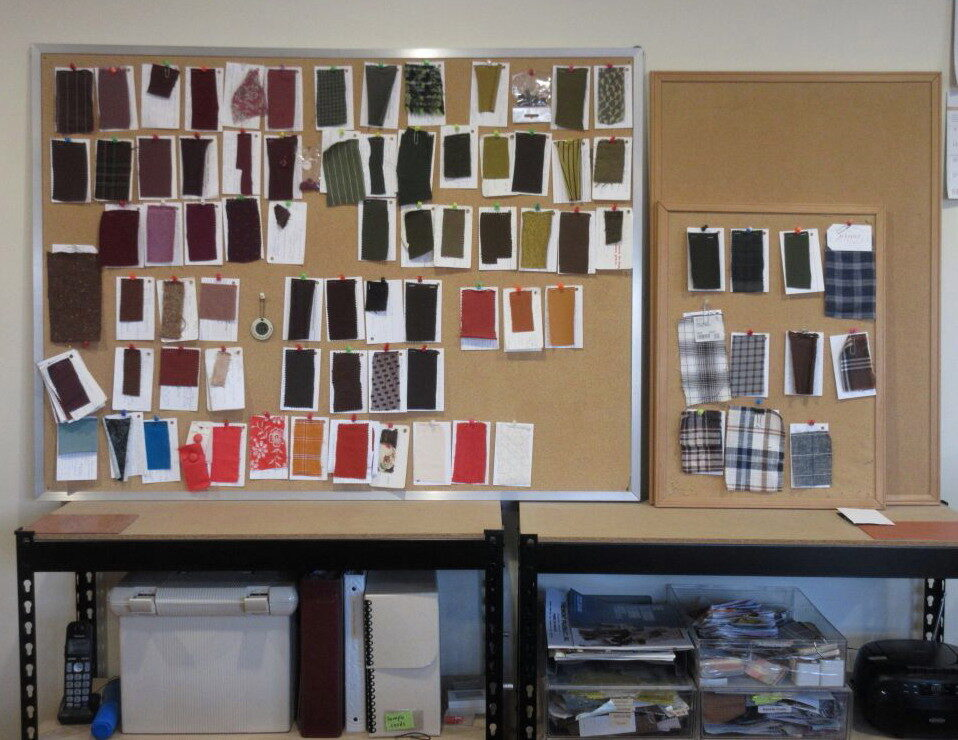
They sit across from my fabric storage.
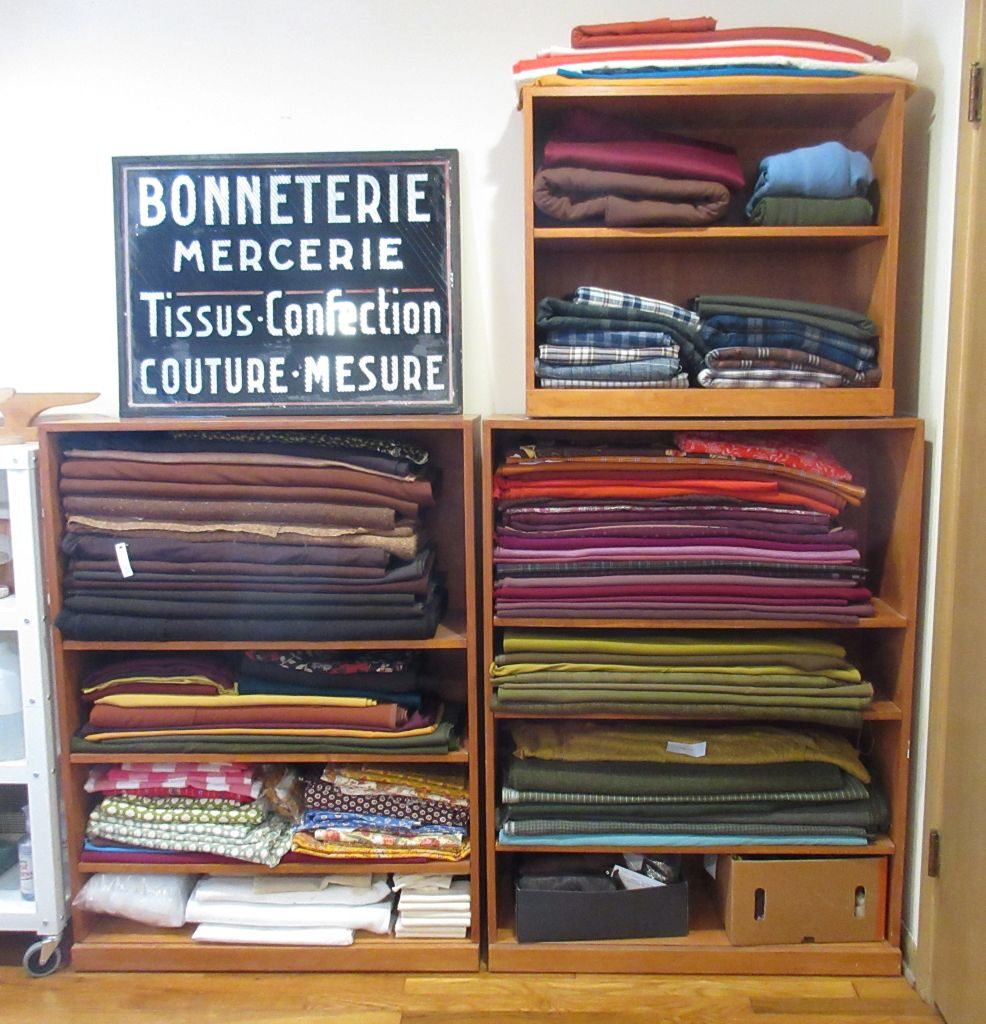
As you can see, those shelves are packed, and retrieving and replacing a fabric requires some tactical maneuvering.
So, before I do any heavy lifting (either literally or figuratively) with yardage, I turn to my swatch boards to try out color and pattern combinations.
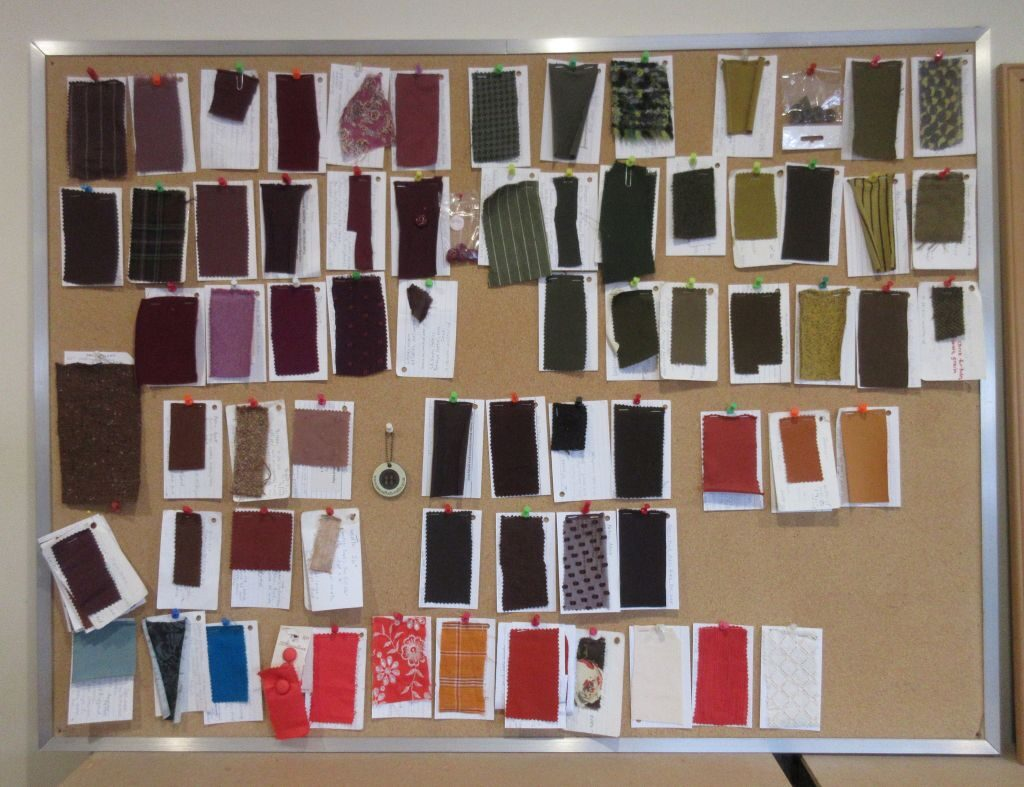
The big bulletin board measures 36″ by 48″ and holds the swatches for my garment projects. I bought it for about $1.00 at a library sale a few years ago.
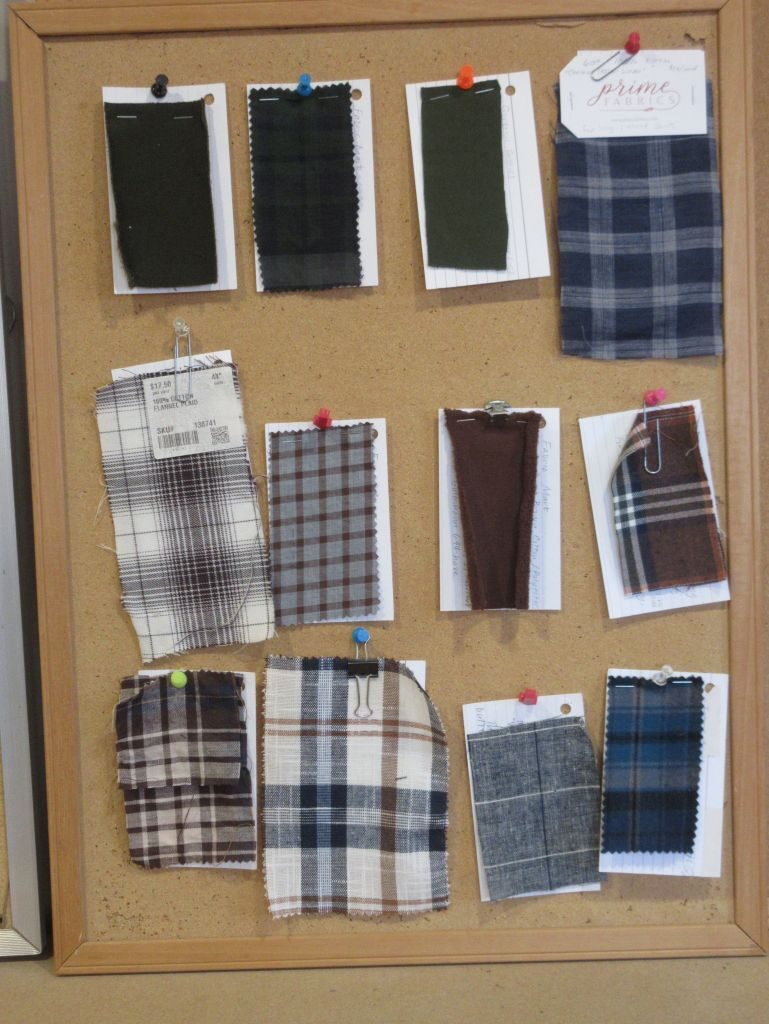
The small bulletin board measures 18″ by 24″ and holds swatches for Jack’s garment projects.
When I buy a fabric I staple a swatch of it to an index card with, usually, the following information: source, price, date of purchase, fiber content, yardage, width, care instructions, and garments I’m planning to make (skirt plus pants, jacket, knit tops, etc.).
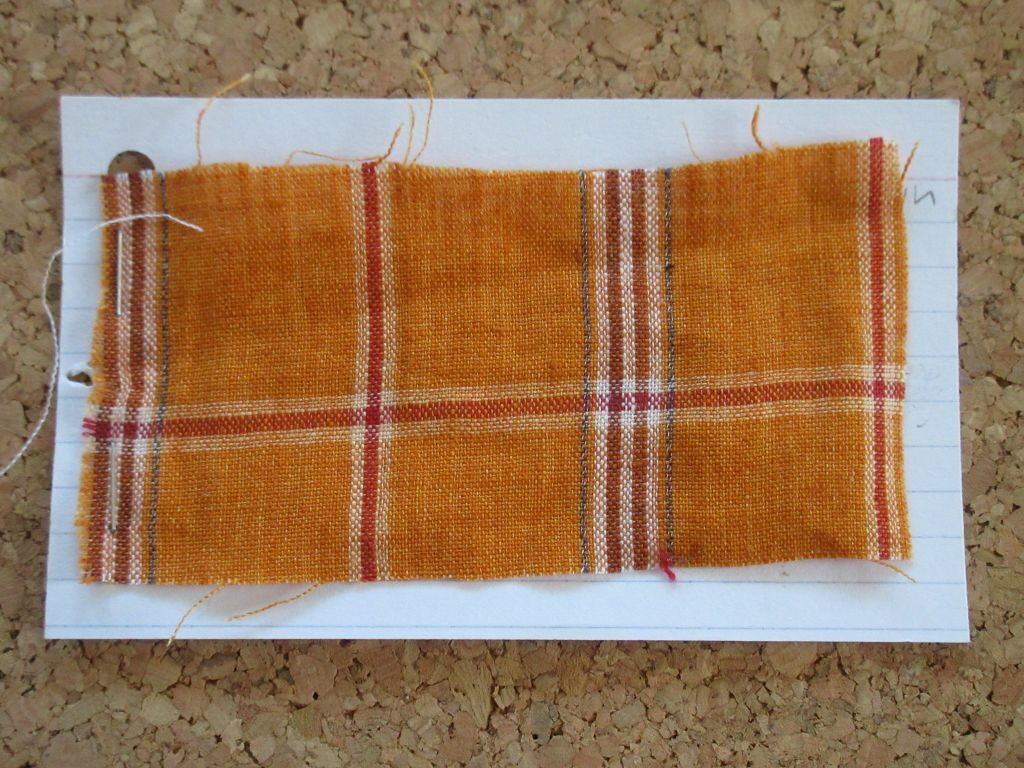
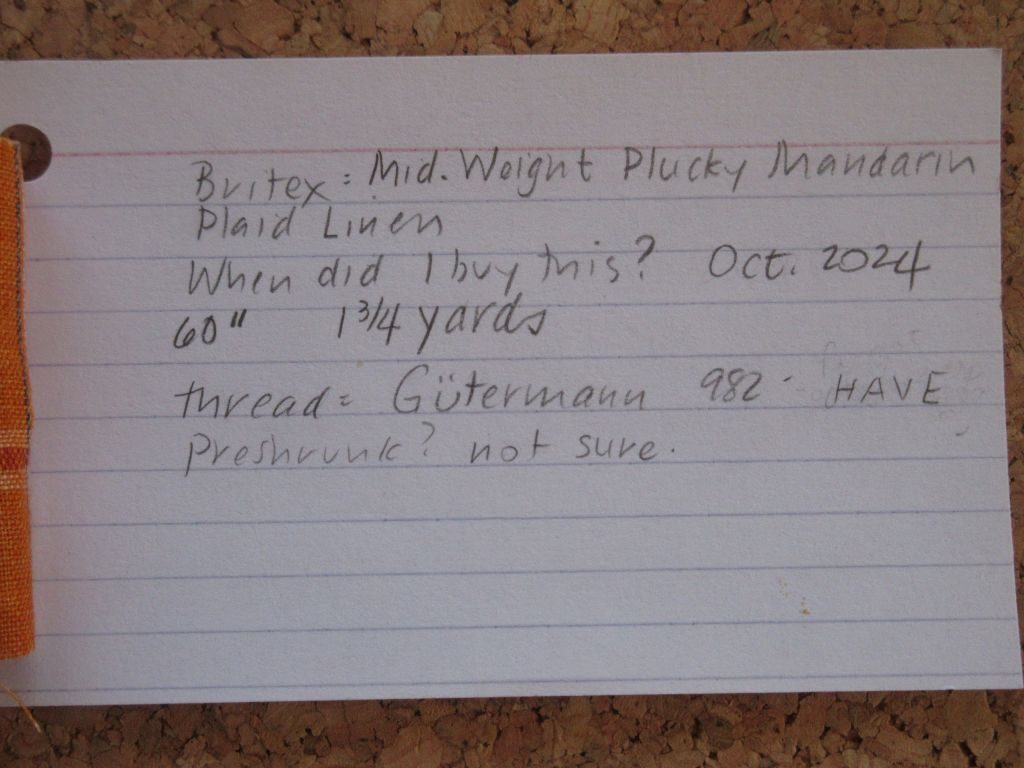
When I preshrink the fabric I’ll note that on the card. When I look for thread color matches I’ll note on the card that I have thread to match or will need to order it. Same goes for zippers and buttons.
There have been odd bits of time when I haven’t felt very industrious but have made progress on a project just checking for matching supplies.
Recently I realized I could run thread through the swatch to show the color match.
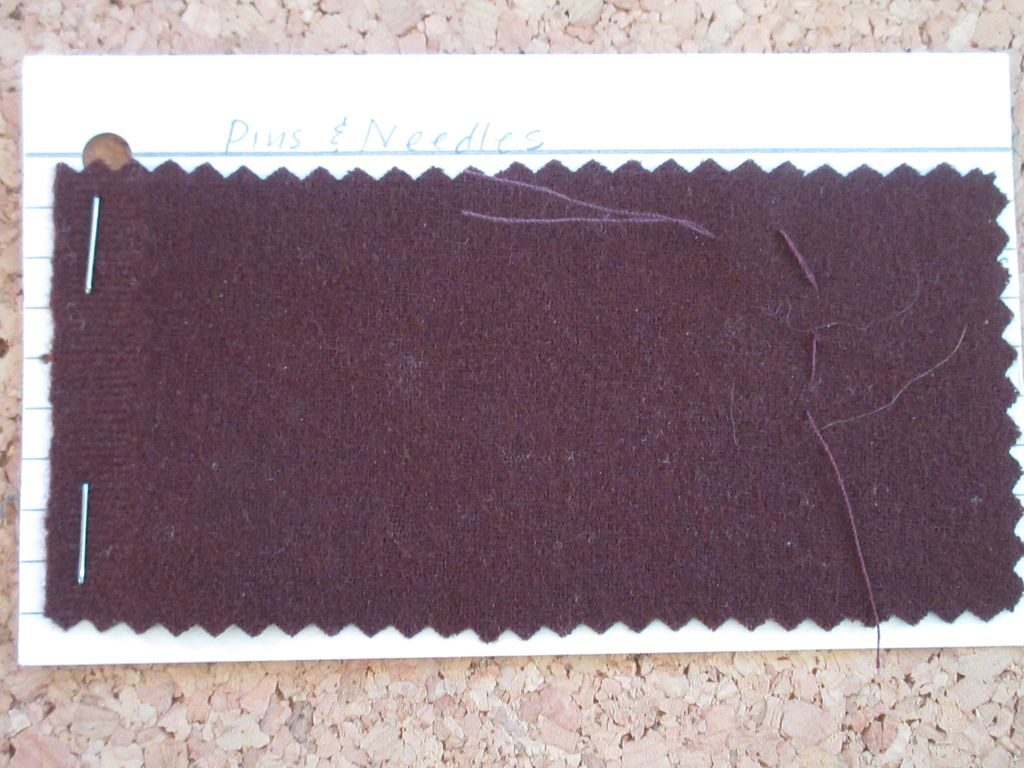
What I love about the mundane bulletin board is how easy it makes displaying swatches in clusters of colors and patterns.
When seen in isolation some fabrics can look drab, but they might be just what’s needed to balance something bright or patterned. Likewise, very distinctive fabrics need the right supporting cast.
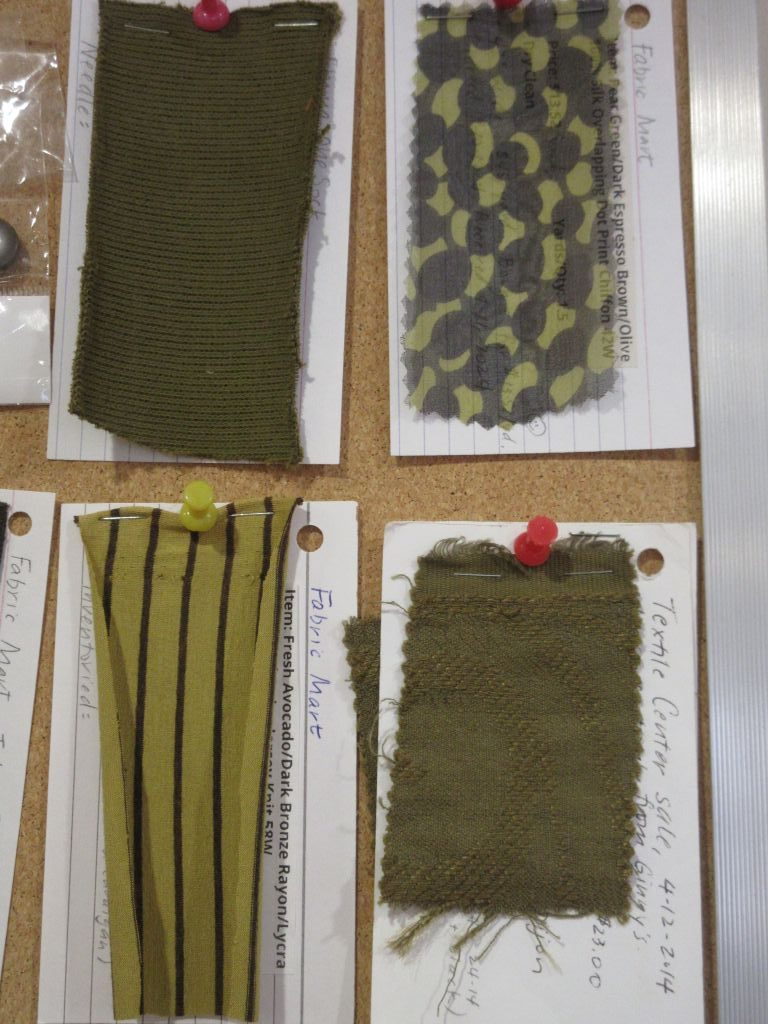
Over the last couple of years I’ve been collecting fabrics in color clusters. One, seen above, is olive greens, olive golds, and olive browns.
I’ve also been collecting mauves, red violets, wines, and plums.
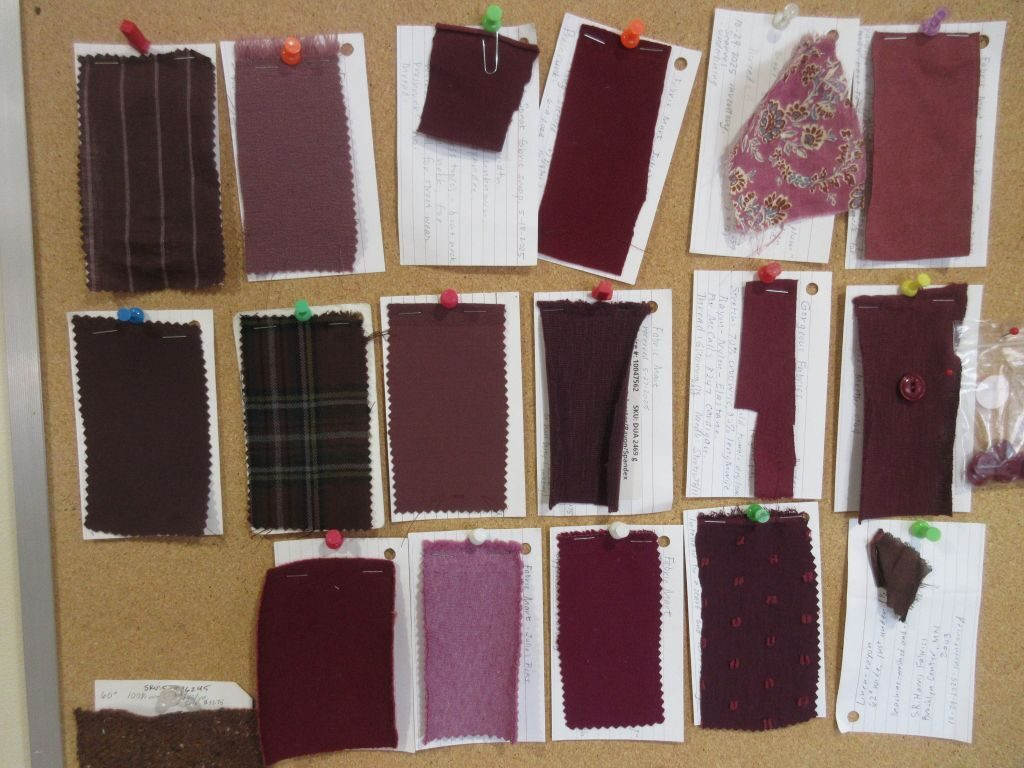
This is where a big bulletin board really earns its keep–being a display space for color relationships both subtle and contrasty. After all, how often is one fabric seen in isolation? Almost always, fabrics are seen in relationships.
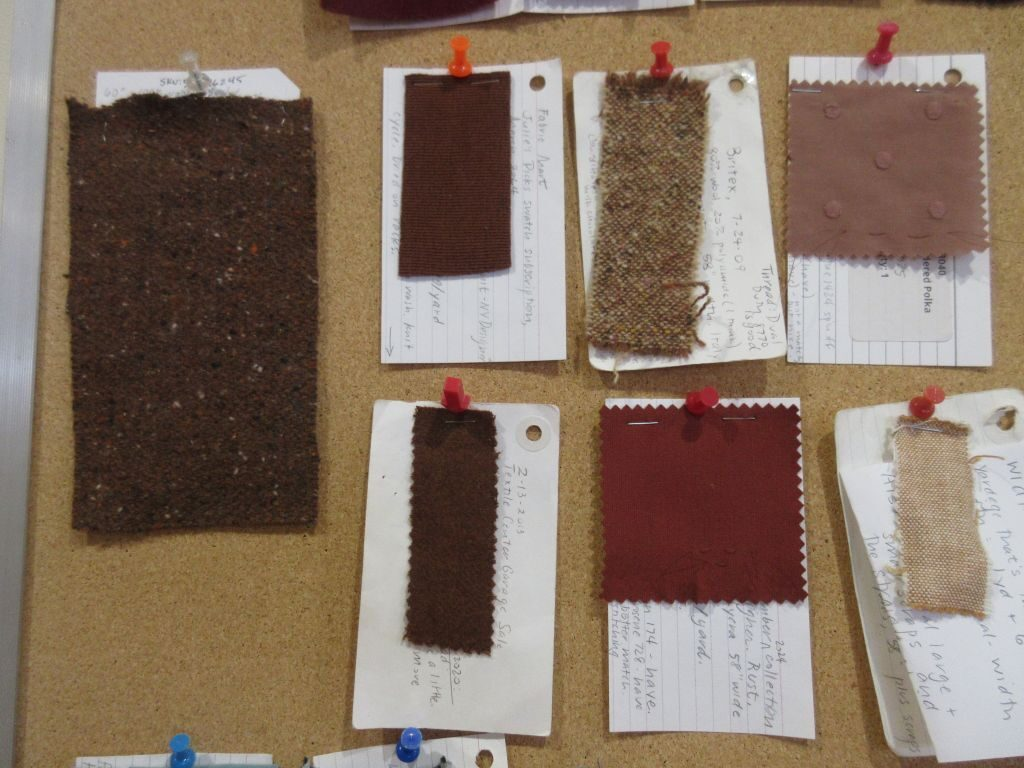
Color relationships, pattern relationships, but also bottom-weights with blouse weights, coatings, and scarf fabrics: in moments I can see where I have ample stock or can justify a new purchase to fill a gap.
I’ve been using this bulletin board method of displaying my stash for a good couple of years, and it really is a living tool. In this sewing room, when I look up from writing a post, my gaze locks onto those swatches. This is no static display. These swatches pose color puzzles I am itching to crack.
A moment ago I got up from the computer to study that dotted cotton lawn swatch, positioned with the rusty browns. It just didn’t quite work with that crowd.
I moved it to the mauves and wines section, which was an improvement.
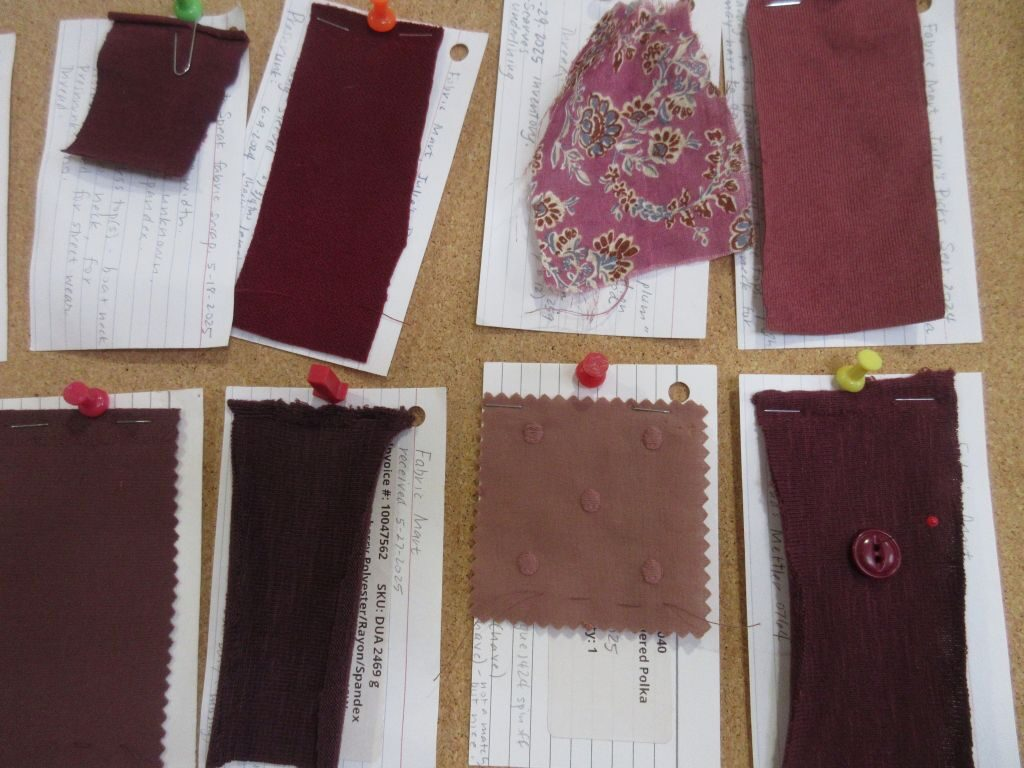
But then I positioned it between a couple of deep reddish browns, and something clicked.
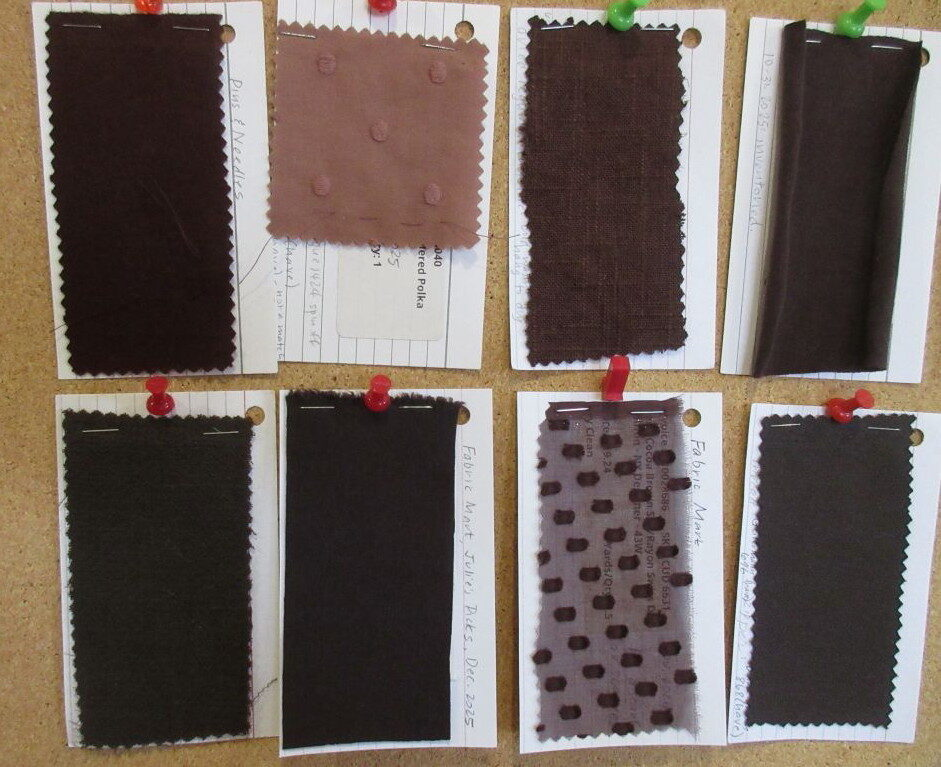
This lawn also complements the bittersweet chocolate brown swatches. When I sew it into a sleeveless top for warm weather I’ll have several choices at hand of bottom-weights for skirts or pants.
Once in a while, a fabric never really gels with the others in any group and isn’t worth planning a group around. I can see over time that it’s best to let that one go. My decision has been arrived at gradually rather than being spur of the moment, which makes it easier for me to put the fabric into a donation pile.
What happens to the swatch after I sew the fabric? That’s what I’ll cover next time.
Related Posts